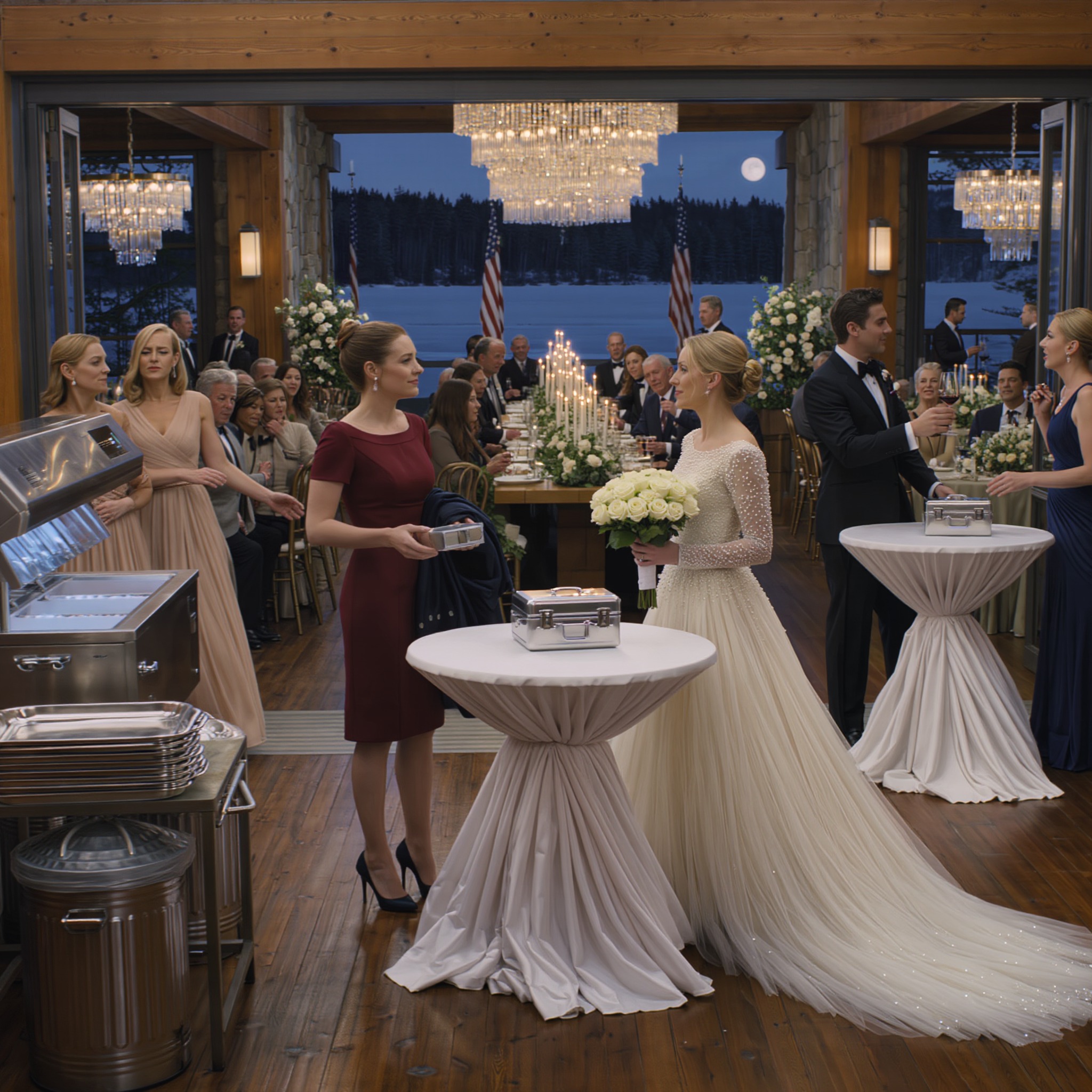
Al matrimonio di mia sorella, mi hanno fatto sedere fuori dalla sala da ballo, vicino ai bidoni della spazzatura e alla macchina del ghiaccio. Poi lei si è avvicinata con il suo perfetto abito bianco, ha sorriso maliziosamente e ha detto: "Immagino che tu non conti", così ho preso il mio regalo e ho lasciato che tutta la sala scoprisse quello che sapevo.
Al matrimonio di mia sorella, ho trovato posto fuori dalla sala da ballo, nascosto vicino al corridoio di servizio, tra i cestini della spazzatura e la macchina del ghiaccio. Lei mi ha guardato nel suo impeccabile abito bianco, ha sorriso maliziosamente e ha detto: "Immagino che tu non conti".
Ho preso il mio regalo, mi sono alzato e me ne sono andato senza dire una parola.
Pochi minuti dopo, tutto cambiò.
Mi chiamo Bella Hayes. Ho ventinove anni. Vivo a Boston e lavoro nel marketing. Hanno detto che si è trattato solo di un malinteso con la disposizione dei posti a sedere, ma io sapevo la verità. Non si può cancellare qualcuno dalla propria memoria per sempre, prima o poi la verità torna a galla.
Il viaggio in macchina fino al matrimonio in Vermont è durato quattro ore. Quattro ore in cui mi sono ripetuta di essere positiva. Quattro ore in cui ho provato a sorridere allo specchietto retrovisore. Forse questa volta sarà diversa.
Era la stessa ridicola speranza che avevo sempre nutrito, e che mi ha sempre deluso.
Il luogo era splendido. Un enorme chalet rustico affacciato su un lago che sembrava specchiato. Chloe aveva sempre il meglio. L'aria era fredda e profumava di pino. Mi strinsi di più il cappotto intorno al mio vestito color vino, un vestito per cui avevo speso troppi soldi perché una parte di me voleva ancora sentire a suo agio.
Entrai nella hall. L'ambiente era caldo, con camini accesi, fiori, legno lucido e quel tipo di luce dorata che rende tutti più delicati di quanto non siano in realtà. Una giovane donna con un blocco appunti e una cuffia mi sorrise.
"Benvenuto. Nome, per favore."
«Bella Hayes», dissi.
I suoi occhi percorsero la lista. Sorrise educatamente, ma il sorriso non le raggiunse gli occhi.
"Ah, sì. La signora Hayes. Da questa parte."
Mi condusse lontano dal grande ingresso della sala da ballo, dove già sentivo musica e risate. Mi ha fatto percorrere un corridoio senza finestre e con la moquette. Era il corridoio di servizio, quello che odorava di cera per pavimenti e cibo andato a male.
Ci siamo fermi accanto a una macchina del ghiaccio ronzante e a una doppia porta che dava sulla cucina.
Lì c'era un unico tavolino rotondo, coperto da una tovaglia bianca della misura sbagliata. La tovaglia era troppo corta. Sopra c'era un solo cartellino con il nome.
Bella Hayes.
Il coordinatore indicò il tavolo con un gesto come se fosse la cosa più normale del mondo.
"Tavolo in corridoio. Da questa parte."
La fissai perché pensavo stesse scherzando. La mia espressione doveva avere tradito, perché il suo sorriso si fece più intenso.
«C'è qualche problema?» chiese lei.
«Credo ci sia un errore», dissi. La mia voce era più flebile di quanto volessi. «Sono la sorella della sposa.»
La sua espressione non cambiò.
"Ecco dove vi hanno posizionato sulla cartella. Se mi scusate, devo accompagnare gli altri ospiti ai loro posti."
Non stava scherzando. Si allontanò, i suoi passi si persero nel tappeto.
Rimasi lì immobile per un minuto intero. Poi le porte della cucina si spalancarono e un cameriere con un vassoio di champagne mi passò accanto alla corsa, quasi urtandomi.
«Stai attento», mormorò.
Le mie mani tremavano mentre tiravo lentamente fuori l'unica sedia. Era una sedia pieghevole di metallo, non come quelle bellissime di legno che avevo visto nella sala da ballo. Mi sedetti. La sedia traballava. Il tavolo tremava ogni volta che passava un cameriere.
Attraverso le porte a vetri in fondo al corridoio, potevo vedere tutto. I lampadari. Le risate. La pista da ballo. Il calore. Tutto ciò a cui ero tecnicamente stata invitata, ma di cui chiaramente non avrei dovuto far parte.
E quando finalmente mi alzai per andarmene, non avevo idea che la notte sarebbe finita con l'intera stanza paralizzata dallo shock.
Durante la mia infanzia, la mia famiglia non ha mai dimenticato di ricordarmi chi fosse la star.
Mia sorella Chloe era la ragazza d'oro. Non era solo un modo di dire in casa nostra. Era il suo ruolo. Aveva i capelli biondi che le cadevano in ricci perfetti anche con l'umidità. Aveva una risata che faceva fermare e voltare la gente. E sapeva, fin da piccolissima, esattamente come usarla.
Quando aveva sette anni, partecipò al concorso di bellezza Little Miss Sunshine. Me lo ricordo benissimo. La mamma passò settimane a cucire paillettes su un minuscolo vestitino rosa. Il papà tirò fuori la sua grossa e ingombrante videocamera. Il talento di Chloe era cantare "Twinkle, Twinkle, Little Star". A metà canzone dimenticò le parole, si mise le mani sui fianchi e ridacchiò: "Ho dimenticato".
Ai giudici è piaciuto moltissimo. Le hanno dato la corona.
Non ha vinto perché era brava. Ha vinto perché era carina.
That pageant crown sat on our living room mantel for the next ten years.
I, on the other hand, was the quiet one.
That same year, I won my class spelling bee. I won on the word “sincerely.” I came home clutching the little blue ribbon, so proud my chest felt tight. I ran into the kitchen.
“Mom, Dad, I won.”
Mom was on the phone, twisting the cord around her finger. She looked up, put her hand over the receiver, and whispered, “That’s nice, honey. Go play. Chloe’s having a crisis about her dance recital costume.”
I stood there with the ribbon in my hand.
“But I won.”
“Bella, not now.”
I went to my room. I pinned the blue ribbon to my bulletin board. It looked small and stupid there.
That was the pattern. Chloe’s life was a series of loud, bright, expensive emergencies. My life was a series of quiet, invisible achievements.
When Chloe was sixteen, she wanted a car. Dad said no. She cried. She slammed her door. She refused dinner and made the whole house revolve around her mood. A week later, a red convertible was in the driveway.
When I turned sixteen, I asked if I could practice driving in Mom’s sedan.
Dad said, “You’re independent, Bella. You can just take the bus, right? It’s better for you.”
He meant it was easier for him.
At family dinners, Thanksgiving, Christmas, birthdays, the entire table was Chloe’s stage.
“Chloe, tell us about your internship.”
“Chloe, that boy. Is he serious?”
“Chloe, your hair. You look just like a movie star.”
Then all eyes would swivel to me for a polite, required thirty seconds.
“And Bella, still in Boston? Still doing that marketing thing? Good. Good for you.”
Then they would swivel right back to Chloe.
It was like I was a piece of furniture. A necessary, quiet, easy-to-handle lamp in the corner. You need the lamp, but you don’t talk to it. You don’t applaud it. You just expect it to work.
Mom said it all the time.
“You’re easier to handle, Bella. Thank God. If I had two Chloes, I’d lose my mind.”
I used to think it was a compliment. I thought it meant I was strong or mature.
But “easier to handle” just meant easier to ignore. “Independent” just meant you’re on your own.
In high school, I won a statewide science fair. It was a big deal. I was invited to a dinner and given a plaque. I had designed a small-scale water filtration system, and I was so proud.
The night of the awards dinner, Chloe had a fight with her boyfriend. I came home with my plaque and walked into the living room. Mom was on the couch rubbing Chloe’s back while Chloe sobbed into a pillow. Dad was pacing.
“He said my prom dress was tacky,” Chloe wailed.
A full three-hour family drama unfolded. Dad ended up calling the boy’s father. Mom made tea. I stood in the doorway holding my plaque.
No one looked at me.
After an hour, I went to my room and set the plaque on my dresser. I just looked at it.
That was my life. I was the supporting actress in the Chloe show. My only job was to be quiet, stay offstage, and never miss a cue to applaud.
My achievements weren’t real. My problems weren’t real. Only Chloe was real.
That pattern, that one-way street, was all I had ever known. It had been carved into our family dynamic as deep and permanent as a canyon, and I was the one always standing at the bottom, in the shadow, looking up.
This hallway seat, this humiliation, wasn’t the first time.
It was just the loudest.
The older wound, the one this new one scraped raw, had opened three years earlier.
I was twenty-six. Mom was selling our childhood home. The house was too big for her now that Dad had moved into his own condo after their quiet, polite divorce. She was moving to a smaller place, and I had driven down to help her pack up the attic.
Of course I was the one who drove down. Chloe was “too swamped” with a huge project at her new job, which probably meant she was at brunch.
So I went.
I spent a Saturday in the hot, stuffy attic, sneezing from dust. The air was thick with the smell of old paper, cedar, and mothballs. It smelled like my entire childhood.
We were sorting through sagging cardboard boxes labeled in Mom’s handwriting: Christmas 1995, old clothes, Dad’s taxes.
Then I found them.
In a big plastic bin, stacked neatly, were the family scrapbooks. Mom loved scrapbooking when we were kids. It had been her one real hobby.
“Oh, look,” I said, my voice softer than I expected. “I remember these.”
I pulled one out. It was heavy. I sat on an old trunk, the wood creaking under me. Mom sat next to me, wiping a smudge of dust off her cheek.
We started to flip through them.
The first book was labeled Bella and Chloe, the Early Years.
For a few minutes, it was nice. It was normal. It was full of both of us. Me, a chubby baby in a high chair covered in spaghetti. Chloe as a toddler with a giant crooked bow trying to help me. Pictures of us in the bathtub, bubbles in our hair. Our first day of school, holding hands, our metal lunchboxes glinting. A trip to Disney. Both of us in Mickey Mouse ears. Me looking terrified of the person in the Goofy costume. Chloe hugging him.
“I remember that,” Mom said, laughing. “You cried for an hour. Chloe didn’t want to leave.”
It was proof. Proof that there had been a time when we were a “we.” A time when the love was spread out, at least a little.
I picked up the next book.
The label said Chloe’s School Days.
I opened it, and just like that, I was gone.
It was full of Chloe. Page one, Chloe’s first-grade play. She was a tree. There were five pictures of her in her little brown costume. Page two, Chloe’s first soccer trophy. Chloe with the team. Chloe holding the trophy. Chloe with Dad. Page three, Chloe’s fifth-grade graduation.
I was in a few pictures, but only in the background, out of focus, my face half hidden, my smile faded.
I picked up the third book.
Chloe, the High School Years.
This one was thick. Every single page was a shrine. Photos of Chloe at her first dance. Photos of Chloe at her sweet sixteen. Photos of Chloe with her friends. Her prom, which took up an entire two-page spread. Her graduation in her cap and gown, holding her diploma.
I flipped through the last few pages looking for something. Anything.
Then I realized I wasn’t there.
There wasn’t a single picture of me past age ten. My own high school graduation, not there. My trip to Spain in college, the one I had saved for two years to go on, not one photo. My twenty-first birthday, my college graduation, all of it missing.
It was like I had vanished. It was like I had simply stopped existing.
My throat felt tight.
“Mom,” I said quietly. It was hard to breathe. “Where are my pictures?”
Mom smiled softly. That same smile, the one meant to be kind but always felt empty. The one that erased me.
“Oh, honey,” she said, patting my hand. “You know how Chloe was always in the spotlight. She loved having her picture taken.”
She looked back at the book, her eyes soft.
“You were always… well, you were always fine on your own.”
I just stared at her.
Dust floated in the single beam of light from the attic window.
“I mean,” she continued, clearly not seeing my face, “you were always so independent. You didn’t need all that fuss. Chloe needed it. You were always the strong one.”
The strong one.
That was when I learned what “strong one” meant.
Strong one meant ignorable one. Independent meant overlooked one. Fine on your own meant you will be left on your own.
It wasn’t that she forgot to put my pictures in. It was that she had never even thought to take them.
My life, my achievements, my milestones, they weren’t fuss. They were my life. And to her, they were nothing. Not worth documenting. Not worth remembering.
I couldn’t speak.
Later that day, as I was emptying her old desk, I found my high school diploma. It wasn’t in a frame. It was in a crumpled manila envelope shoved in the back of a drawer with old bills, expired coupons, and a user manual for a blender she didn’t even own anymore.
Chloe’s diploma, I knew, was in a custom cherrywood frame in the living room.
That was the old wound.
I closed the scrapbook.
“You’re right, Mom,” I said, my voice hollow. “I was fine on my own.”
She beamed, thinking I had given her a compliment.
“I knew you’d understand.”
I drove back to Boston that night. I didn’t speak to her for a month. She never even noticed. She just thought I was busy.
That was the night I learned silence could be both survival and exile.
I had survived my childhood by being quiet, by not making a fuss, by being independent. I had avoided the drama that always followed Chloe. But in that silence, I had been exiled. I had been quietly and efficiently erased from my own family’s history.
When Chloe’s wedding invitation arrived, I should have known better.
It came on a Tuesday in April. I got home from work with my feet hurting and my shoulders tight from a long meeting. I checked my mailbox, and there it was.
It was so thick and heavy it felt like a weapon. A cream-colored envelope. My name, Ms. Bella Hayes, written in swirling gold calligraphy.
It looked expensive. It looked threatening.
My stomach twisted.
I didn’t want to open it.
I went inside my apartment, dropped my bag, and poured a glass of wine. I sat on my couch while the invitation sat on my coffee table. I stared at it for a long time.
This was a test. I knew it. A classic no-win trap from my family.
If I didn’t go, I was the bitter, jealous, difficult sister. I was the one making it about me. I would be the subject of hushed, angry phone calls for months.
If I did go, I had to sit there for an entire weekend. I had to smile. I had to wear a nice dress. I had to watch the whole world, my parents, my relatives, all their friends, celebrate the person who had been the center of their universe and the black hole of mine.
I had to watch them applaud the sun while I sat in the darkness.
It was a performance, and I was being handed my script.
I told myself it would be different this time.
We’re adults now, I thought, taking a sip of wine. I’m twenty-nine. She’s twenty-seven. We’re past all that high school nonsense.
I was lying to myself. I knew it. But I wanted to believe it. I wanted so badly to have a normal family just for one day. I wanted to be the sister in the nice dress, smiling, and for it to be real.
So I did all the things.
I opened the invitation.
Chloe and Noah request the honor of your presence.
I went to their registry website. It was a list of things I could never afford. A five-hundred-dollar blender. A seven-hundred-dollar vacuum. A thousand-dollar honeymoon experience fund.
I rolled my eyes and bought them a two-hundred-dollar set of crystal wine glasses. It was more than I should have spent, but it was important. It had to look supportive. It had to be nice.
Then came the bridal shower. It was a champagne brunch at a fancy hotel in Boston. I walked in, and it was a lot. A sea of pink and white, balloons, flowers, and about thirty women all laughing too loudly.
“Bella, you made it!” Chloe squealed, hugging me.
It was a dry, papery hug. She smelled like perfume and hairspray.
I sat at a table with her college friends. They all had perfect hair and tiny, expensive-looking dogs in their purses. They talked to each other, around each other, but not to me.
I was invisible again.
I ate my tiny sandwich and sipped my champagne.
We played games. “How well do you know Chloe?” I lost. “Make a wedding dress out of toilet paper.” One of her friends called my team’s dress “sad.”
Then came the gifts.
It was a mountain. A mountain of beautifully wrapped boxes. Chloe sat on a chair like a queen on her throne and opened them one by one.
“Oh my God, the blender!”
Squeal.
“Oh my God, I love this!”
Squeal.
I watched her. Her smile was bright, but her eyes were calculating. She was making a list. Who gave what. Who spent what.
My turn came. She picked up my box, the heavy one with the crystal. She ripped the paper.
“Oh,” she said. “Glasses.”
She didn’t squeal. She looked at the card.
“From Bella,” she announced to the room.
She held them up for one second.
“Nice.”
Then she handed them to a bridesmaid, who put them on the done pile. Chloe moved on to the next gift.
Nice.
I drove home from that shower feeling small and foolish and, more than anything, poor.
But still, I was going to the wedding.
I bought the wine-colored dress. I spent a whole Saturday looking for it. It was agony. I went to a department store and walked that impossible line. I couldn’t get something too nice. God forbid I look better than a bridesmaid. Chloe would have a fit. But I couldn’t get something too plain either, or Mom would give me that look. The “Oh, Bella, you’re not even trying” look.
Finally, I found it. A simple, long wine-colored dress. Elegant. Appropriate. Safe. Invisible.
The night before the wedding, I was in my apartment in Boston packing my overnight bag. I laid out the dress. I had my shoes. I had the small silver gift box I was going to bring with a separate little something inside.
I was filled with that old familiar knot of anxiety. The here-we-go-again feeling.
My phone buzzed on my bed beside my suitcase. I looked at it.
A text from Mom.
Please, Bella, just for me. Tomorrow is Chloe’s day. Don’t make this about you.
I stared at the screen. The blue light of the phone was the only light in my room.
Don’t make this about you.
My hand started to shake.
When had I ever made anything about me? When had I ever been allowed to?
My simple act of existing was a threat. My presence, my quiet, invisible, easy-to-handle presence, was a problem to be managed. Just by being there, I was a risk.
I might pull focus. I might have a facial expression that wasn’t one hundred percent adoration for Saint Chloe. I might, God forbid, look sad or quiet and make some outsider ask me if I was okay.
And that would be a disaster.
My job was to show up, smile, be easy, and not make it about me. As if existing in the same room as Chloe might ruin her perfect daughter’s day.
I sat on my bed for a long time. I thought about not going. I thought about throwing my phone across the room.
Instead, I picked it up. My fingers were cold.
I texted her back.
Okay, Mom. I won’t.
I turned off my phone, finished packing, and tried to sleep. The knot in my stomach felt like a rock.
The next day, I sat in that hallway for almost thirty minutes. It felt like a year.
I sat on the wobbly metal chair next to the buzzing ice machine. The kitchen doors opened every few minutes with a sharp swoosh and clap. A waiter rushed past carrying a huge tray of tiny appetizers.
“Watch it, hon,” he said, not even looking at me.
Another came through.
“Table twelve needs bread now.”
I was in the way. I was a piece of furniture left in the wrong spot. I was an obstacle.
My feet were cold. The thin carpet did nothing to stop the chill from the floor. My wine-colored dress felt thin and stupid.
Through the glass-pane doors at the end of the hall, I could see the party. I could see the golden light. I could hear the muffled music. I could see people, my family, laughing.
I saw my aunt Karen, her head thrown back at something my uncle said. I saw my mother fixing Chloe’s veil. She looked happy. Her face was glowing. I hadn’t seen her look that happy in years.
I saw my father standing with Noah’s father. They were holding glasses of champagne, nodding and smiling.
No one had come to find me. No one had looked for me. No one had even noticed I was missing.
That was the part that hurt the most.
They weren’t just ignoring me. They had genuinely, completely forgotten about me.
I was not a person at this party. I was not a sister or a daughter. I was just a name on a list, and they had put that name next to the ice machine.
My face was hot. I could feel tears stinging behind my eyes. I refused to cry. I would not cry. Not here. Not in a service hallway.
I pulled out my phone. No service.
Of course.
I was completely alone.
I adjusted my dress and tried to decide what the easy-to-handle thing would be.
Do I stay? Do I sit here all night like a dog waiting for someone to remember me?
Do I go in? Do I walk into that ballroom, find my mother, and say, “Hi, Mom. You put me in the hallway”?
I could already see her face. The polite, strained smile. The low, hissing whisper.
Bella, don’t. You’re making a scene. Just find a seat. Stand in the back. Don’t make this about you.
Do I leave? Do I stand up, walk to my car, drive back to Boston, and block every number?
That was the tempting one.
I was just about to do it. I had my purse in my lap. I had the little silver gift box in my hand.
Then I heard her.
“Well, well. Look at you.”
The voice was light and airy, and it cut right through me.
I looked up.
It was Chloe.
She was a vision. I’ll give her that. Her dress must have cost more than my car. It was covered in lace and thousands of tiny pearls. Her blonde hair was swept up in a way that looked effortless and probably cost a thousand dollars. Her makeup was perfect.
She looked like a princess.
A mean, petty princess.
She was adjusting her dress, her massive white veil trailing behind her. Her bouquet of white roses trembled slightly in her hand.
She looked at me. Then she looked at the wobbly table. Then she looked at the buzzing ice machine. Then she looked back at me and smiled.
It was that smile.
The smile I had seen my whole life. The smile she gave me when she was seven, right after she told Mom I was the one who broke the antique vase. The smile she gave me in high school when the boy I liked asked her to prom.
It was a smile that said, I win. I always win. You always lose.
“Hallway seating, huh?” she said.
Her voice dripped with fake sweetness.
I just stared at her. I couldn’t find any words. My throat had closed.
She laughed, a small tinkling sound.
“Guess it’s where you belong.”
And then something inside me snapped.
It was quiet. It wasn’t dramatic. It was a tiny cold click.
It was the spell I had been under my whole life. The spell that told me to be quiet, to be polite, to be the bigger person, to be the easy one, to understand. The spell that whispered, If you just take one more hit, if you absorb one more insult, if you swallow one more humiliation, maybe they will love you.
It was the hope of a child.
And I was twenty-nine years old.
Chloe’s words, “Guess it’s where you belong,” weren’t even an insult anymore.
They were the truth.
They were the most honest thing anyone in my family had ever said to me.
I didn’t belong. Not in that hallway waiting for scraps of affection. Not at that wedding. Not in that family, at least not the way they had built it.
For one second, I almost laughed at the brutal ridiculousness of it all.
They had finally stopped pretending.
I looked at Chloe, at her perfect smiling face.
“You’re right, Chloe,” I said.
My voice was calm. It didn’t even shake. It was a voice I had never heard from myself before.
Her smile faltered for just a second. She wasn’t used to me agreeing. She was used to me looking hurt. She was waiting for tears. She was waiting for me to crumble.
I didn’t.
I stood up. The metal folding chair scraped pathetically against the floor.
I picked up my purse. I picked up the small silver gift box.
“Congratulations,” I said. “You look beautiful.”
Then I walked past her.
I didn’t run. I didn’t cry. I just walked.
I could feel her watching me. I could feel her confusion. This wasn’t part of her script. I was supposed to sit there and take it. I was supposed to be the victim.
What she didn’t know was that, in that one second, with that one insult, she had set me free.
The spell was broken.
I wasn’t the quiet one anymore. I wasn’t the easy one.
I was done.
And I wasn’t leaving empty-handed.
I walked down the service hallway, my heels clicking against the floor. I could feel the heat of Chloe’s confused anger on my back. I didn’t care.
The spell, the one I had lived under for twenty-nine years, was gone.
The spell said I had to be nice. I had to understand. I had to be the bigger person, which in my family was code for shut up, Bella, and let Chloe win.
Per continuare a leggere, clicca su ( SUCCESSIVA 》) qui sotto!